Hinge vs Tinder for men: the honest comparison
Hinge vs Tinder for men in 2026: how each one works, who uses them, which is growing, and which suits a man who wants dates or a relationship. Plus how to use both.
By Still GravityPublished 5 min read
The short answer
Want a relationship? Use Hinge first. Want the biggest pool, or you’re in a smaller city? Tinder still has the reach. Many men do best with Hinge as the main app and Tinder as the second.
- Hinge rewards writing: every like is tied to a specific photo or prompt.
- Tinder has the widest reach: 46% of US online daters have used it, more than any other app.
- Momentum in Q2 2026: Hinge revenue up 22%; Tinder’s daily users still down 4%, though the decline is narrowing.
Is Hinge or Tinder better for men?
Hinge, if you want a relationship and you can write a little. Every like on Hinge points at a specific photo or prompt, so effort shows, and people tend to use it with clearer intentions. Tinder’s advantage is reach: it’s the app most people have tried, which matters most in smaller cities where Hinge may be quiet.
So the honest answer depends on where you live and what you want. For most men in a big city looking for something serious, Hinge first. For men in a smaller town, or who want to date widely, Tinder still earns its place. Many men end up using both, with one as the main app.
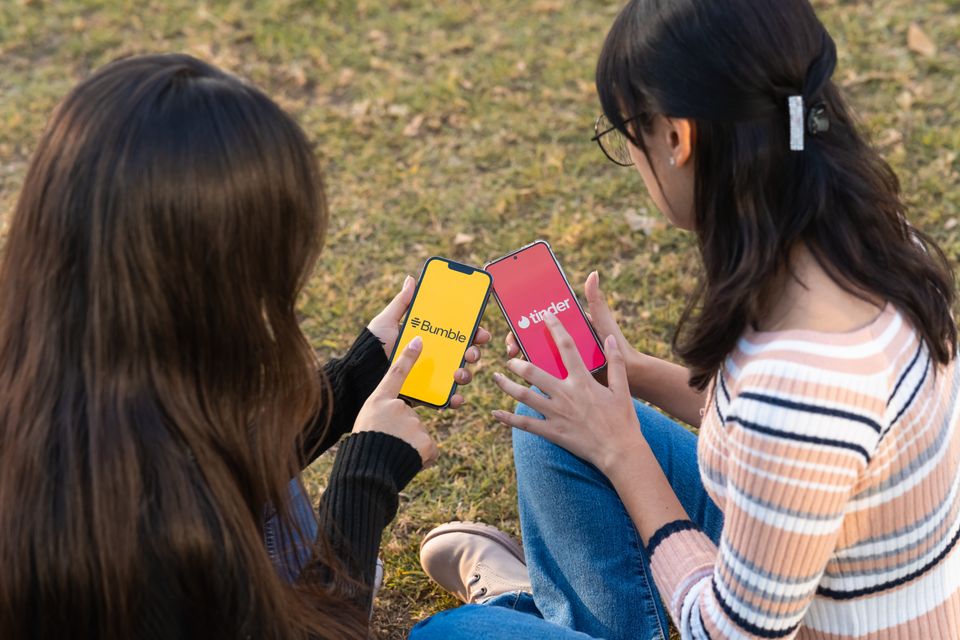
How do Hinge and Tinder compare?
The core difference is speed versus depth. Tinder is built for quick decisions on photos. Hinge slows you down and asks you to react to something she wrote or shared.
| Hinge | Tinder | |
|---|---|---|
| How you show interest | Like or comment on a specific photo or prompt | Swipe right |
| What decides a match | Photos plus three written prompts | Mostly photos |
| Share of US online daters who’ve used it (Pew, 2022) | About one in five | 46%, the most of any app |
| Momentum, Q2 2026 | Revenue up 22%, monthly users up 13% | Daily users down 4% year over year, the best trend in 10 quarters |
| Typical intent | Mostly dating toward a relationship | Broad: casual to serious |
| Free version | Yes, with limits | Yes, with limits |
| Best for | Men who want something serious, in cities | Men who want reach, or live in smaller cities |
The usage numbers come from a Pew survey of 6,034 US adults in 2022, which found that 46% of online daters had used Tinder, about three in ten Match or Bumble, and about a fifth Hinge. Those are lifetime figures, gathered before Hinge’s recent growth.
Which one is growing?
Hinge. Match Group, which owns both apps, reported for the second quarter of 2026 that Hinge grew revenue 22% year over year, with global monthly users up 13%. The same report said Tinder’s year-over-year decline in daily users narrowed to 4%, its best result in ten quarters.
In plain terms, Tinder is still huge but shrinking slowly, while Hinge is growing fast. For you, that means Hinge has more new profiles arriving each week, and Tinder has a larger but older pool. Tinder is also changing: the same report describes a full rebrand and new features such as Double Date and local events, so its feel may shift over the next year.
How does matching feel different for men?
Tinder is a numbers game, and the numbers are tough for men. A study of Tinder behavior found that women gathered matches quickly while men gathered them slowly, and that a little effort grooming a profile went a long way, especially for male users.
That decision happens fast. In experiments, judgments of a face after a tenth of a second correlated highly with judgments made with no time limit. On Tinder, your first photo is most of your profile.
Hinge spreads the decision across photos and words. Research on dating profiles found that photos predicted attractiveness most strongly, but the free-text part also played an important role. If you’re a better writer than model, Hinge gives you more to work with.

How do openers differ?
On Hinge, your opener comes with the like: a comment on a specific prompt or photo. On Tinder, you match first and then send a message. Either way, the same thing works: point at something specific and ask one easy question.
In speed-dating data, people who asked more questions, especially follow-ups, were liked more and got more second dates. And plain beats clever: in field experiments, women reacted more negatively to cute or flippant opening lines than to direct ones. Skip the pickup lines on both apps. Compare “hey, how’s it going?” with “That view in your third photo is unreal. Where was it?” The first could go to anyone; the second could only go to her, which is why it gets a reply.
Why do so many men feel discouraged?
Because low numbers are normal. In the Pew survey, 64% of men who had dated online recently said they felt insecure about how few messages they received. Few matches is common, not a verdict on you.
Who you like plays a part. On dating sites, people tend to message partners about 25% more desirable than themselves, and reply rates drop as the gap grows. On Tinder especially, liking only the most attractive profiles is the fastest way to a quiet inbox.
Which works better in a smaller city?
Usually Tinder. Hinge’s format shines when there are plenty of active profiles near you; in a small town you may run through them in a few days. Tinder’s reach means more people within your distance setting, and that matters more than format when the pool is thin.
If you live somewhere small, widen your distance and age filters a little, keep Tinder as your main app, and check Hinge once a week for new profiles. Then add an offline channel. In a smaller place, friends of friends and regular activities do a lot of the work apps can’t, and the where to meet women finder helps you pick one.
What makes a strong profile on each?
On Tinder, your photos are the profile. Lead with a clear, smiling photo of your face in daylight, then add a full-body shot, one of you doing something you enjoy, and one social photo where you’re easy to spot. Keep the bio to two short lines with one specific detail and, if you like, a light hook she can reply to.
On Hinge, the same photos work, but your three prompts do more. Choose one that shows humor, one that shows warmth and one that invites a reply, such as a guess, a debate or a date idea. Write each answer with a real detail: a place, a habit, an opinion. Then cut the clichés and any line that starts with “don’t.”
On both, be honest. Recent photos and accurate basics save you from first dates that start with disappointment.
Is Tinder only for hookups?
No, though it has a wider mix of intentions than Hinge. People meet long-term partners on Tinder every day; they just share the app with people looking for something lighter. The fix is simple: say what you want in a line of your bio, and notice whether her profile says the same.
If you want something serious and you’re getting nowhere on Tinder, that’s a reason to put more of your time into Hinge rather than to give up on apps altogether.
How long should you give an app?
About a month of steady use, with your best profile, before judging it. A few days isn’t enough to see a pattern, and changing five things at once makes it impossible to know what helped. Fix one thing, give it a week, then look again.
Should you pay for either?
Not until the free version works. If your free profile gets matches that turn into conversations, paying can save time. If not, paying mostly shows a weak profile to more people. Prices vary by age, location and plan length, so check in the app.
How should you use both?
Pick a main app based on your goal and city, and give it a month. Keep the same strong first photo on both. On Hinge, put your effort into prompts; on Tinder, into your photo set and short, specific openers. Move good chats to a date within a few days on either.

What's the final call?
Hinge first if you want a relationship and live in a city; Tinder first if you want reach or live somewhere smaller. Start with the Hinge prompt picker or the Tinder opener generator, and run the match diagnosis if numbers stay low. Comparing Bumble too? See Hinge vs Bumble and Tinder vs Bumble. Unsure apps are worth it at all? Read are dating apps worth it.
Questions men ask
Is Hinge or Tinder better for men?
For a relationship, Hinge usually works better because the format rewards effort and people tend to use it with serious intent. Tinder’s strength is reach, which matters most in smaller cities.
Is Tinder only for hookups?
No. People use it for everything from casual dating to long-term relationships. It just has a broader mix of intentions than Hinge, so be clear about what you want.
Why do I get more matches on Tinder than on Hinge?
Swiping is fast and low-effort, so matches come easier but mean less. On Hinge, fewer matches is normal; what matters is how many turn into conversations and dates.
Can I use the same photos on Hinge and Tinder?
Yes. A strong first photo works on both. On Tinder, photos carry more of the weight; on Hinge, your prompts do more of the work.